Though most readers overwhelmingly agreed with my post yesterday, there was pushback, and much of the responses in favour of leaving lockdown sound eminently reasonable. They sound balanced and thoughtful. They suggest that my call to stay in lockdown comes from an emotional place, and their support of opening up comes from an objective place. I feel like these responses are representative of a broad swath of the British public (and probably much of the American public’s urge to open as well). I want to respond.
I’ll break it down by the most common things I’m hearing.
1. There aren’t that many people dying.
How can you place a value on human life? The Hebrew Bible teaches us, “Whosoever saves one life, saves the whole world.”
Tell me, if all it took was one person to die, and the rest of us would be safe from the coronavirus, would you sacrifice a member of your family?
It’s easier to be ok with a few people dying when you don’t know them.
And why is death the only measure of severity? People are ill for weeks from this virus, and many are reporting lasting lung and heart problems. It takes months to fully recover. These things are part of the whole picture. The economy can’t run if everyone is ill.
2. The people who are dying are mostly old.
Does that make it ok?
How old is old? I know a 70 year old woman who runs 5K every week. I know an 89 year old man who received his doctorate last year.
Would you be ok if your granny died of the coronavirus?
3. The economy can’t handle much more, and too many people will lose their jobs. We need to open up to make money that supports the NHS!
This is an issue of understanding government responsibility and the relationship to the economy. There were far more responsible ways to approach safe-guarding the economy in this situation. The furlough scheme could have been more broadly applied, and extended. The government supports for small and independent businesses could have been put in place more effectively so that businesses could be supported by their insurance, and given a safety net until re-opening. There could have been more thoughtful, responsible government planning and people would not have to fear for their jobs, their homes, or their ability to feed their children.
People seem to have accepted the attitude that the big corporations are what keep the economy afloat and the country running. This stems back to the theory of trickle down economics introduced in the ’80s by Reagan and Thatcher, which suggests that the more money rich people have, the more the poor will benefit because the spending will “trickle down.” However, since trickle down was introduced, the gap between rich and poor has increased, with the rich getting richer and the poor getting poorer. Meanwhile, the market has become increasingly volatile. Big corporations grow more powerful, get more tax cuts, and contribute less to the welfare state.
And about supporting the NHS– while taxes go to the government, and the government funds the NHS, this government and the Conservative governments which have come before it for the last ten years have done nothing but defund the NHS. Going back to work isn’t going to give the NHS any more money than they have now unless the government decides to redirect money towards the NHS, which they have shown no indication of doing.
The government isn’t sending Joe Normal back to work to help Joe, nor to help the NHS, they’re doing it to line corporate pockets.
(And a surge in COVID cases as a result of opening up is going to overwhelm the NHS and make it worse.)
I also want to acknowledge that certain sectors of the economy are booming as a result of lockdown. Grocery, online shopping, home decorating, etc have all had record quarters. The government and the media are telling us the economy is tanking, and when something is said on TV, the market will inevitably respond somewhat as people sell, but I think we’re not getting the whole picture.
4. People are having massive mental health crises.
They are.
There is no minimising mental health in crisis. Suicidality is real.
I am a mental health professional. I hold a counselling certification. I have worked on the front lines with people in mental health crisis.
I have been suicidal. I have had a plan. I have known very dark places.
Lockdown may have made mental health crises worse. Simply facing a pandemic may have made it worse. Lockdown might have simply revealed problems which were already there.
Mental health crises happen whenever, whatever the situation. We need to do better about addressing them as a country, and part of that is funding the NHS mental health remit, which has been suffering for years.
Suicide and mental health are always issues. They always exist. Mental health is, if you will allow me, a chronic problem. Deaths due to a pandemic are what doctors would call an acute problem, meaning severe and sudden at onset.
A doctor wouldn’t ignore the acute problem due to a chronic condition; doctors must treat the acute problem and manage the chronic condition.
We must, as a society, respond to the acute problem of the pandemic, while also managing the chronic issue of mental health.
5. Lockdown is bad for women, especially women in lockdown with their abusers.
Yes it is. I’ve been thinking about this since day one.
My undergraduate dissertation was entitled Immigrant Women and Domestic Violence: The Shortcomings of the Violence Against Women Act. I spent a summer interning in the Family unit of Legal Aid in New Haven, taking affidavits and interviewing women who were survivors of domestic violence, human trafficking, and sex-based war crimes. It was one of the most difficult things I’ve ever done, at age 22, but I learned a lot about domestic violence.
Abusers under stress mean the abuse is worse. Women who live with their abusers may have nowhere else to go. More women could die because of being in lockdown with their abusers.
(Also, I want to acknowledge, men are abused, too. At least one of the people I worked with that summer was a man.)
Domestic violence is a chronic problem. The pandemic is acute. We still need to treat the acute, and it’s important to keep working on the chronic.
6. It’s impossible to understand how hard lockdown is with children, who you’re trying to homeschool while also possibly trying to work from home, or even just merely survive.
I can’t imagine. I’m not going to say I can, because I don’t have children. It must be really hard.
Is it worth opening up? Is it that bad?
Only parents can answer that question.
7. We’re years away from a vaccine, possibly never going to have a vaccine, so we have to learn to live with this.
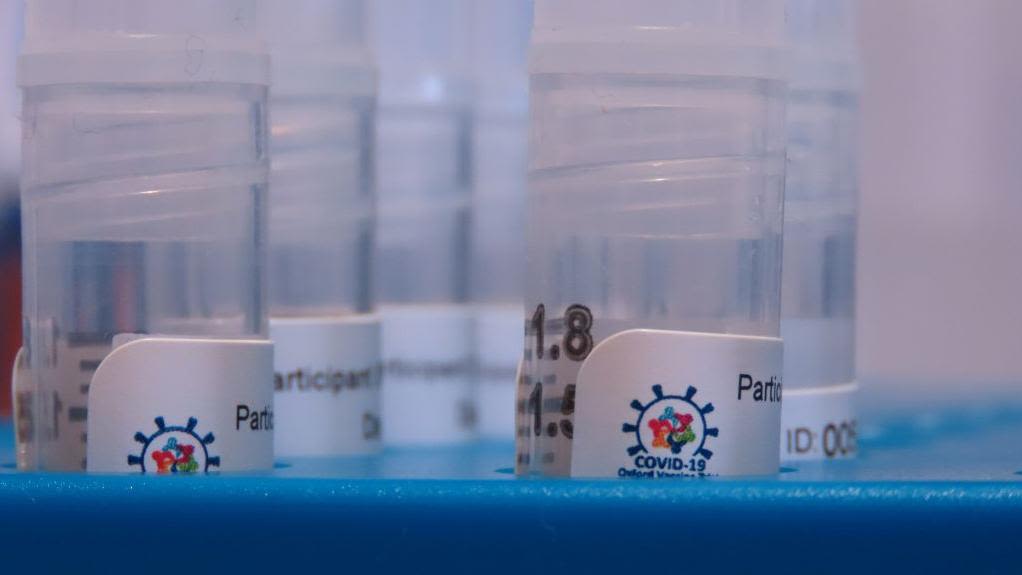
Actually, the Oxford Vaccine Group is now in Phase II/III Human Trials of a COVID-19 vaccine. They recently opened up human trials to healthy volunteers over 70, so things must be going fairly well. You can read more about it here.
Also, when did it become a choice between living with COVID and having a vaccine? We could manage lockdown more effectively and simply eradicate the virus. There could be a point where, through population control, everyone who had been infected had recovered or passed, and they had not come in contact with anyone else to pass on the virus, and thus it was eliminated. Then, you keep it out with quarantines and tests at the borders. Any small outbreaks can from then on be controlled, like the initial outbreak in this country in Sussex. Iceland did it. New Zealand did it. We could do it in the UK a whole lot more easily than a bunch of other countries.
8. You must be frustrated, being stuck at home while the others get to go back to their daily lives. It’s so unfortunate that you’re ill with a chronic illness.
When someone says this to me, it feels like they are suggesting that my career, my worth as a worker, my contribution to society is less important because of my illness. While the country opens up too early, and more people start getting it, this extends my curve. It extends the time in which I am unable to go about my livelihood.
What is so special about my livelihood? Aren’t I just some academic?
For my next project, when I get out of here, I plan on studying the attitudes and beliefs around public health emergencies in the ultra-orthodox Jewish world. Yes, the people who the newspapers talk about being disproportionately affected by this. The population so many people criticise for congregating against the rules, etc etc.
My research could save many, many lives the next time there’s an epidemic.
And I’m one of maybe 10 people in the world who could do this work.
So yes, I want to get out and get back to work, but you, the general public, also need me to.
Aside from that… the chronically ill shop worker around the corner from me also needs to get back to work to feed her family, and feel like she leads a meaningful existence. Is a healthy person’s job worth more than an ill person’s job?
If we all stayed in just a little longer together, and did it properly, we could all get back to real normal in a shorter period of time. It’s a fact.
 This Isolation Life